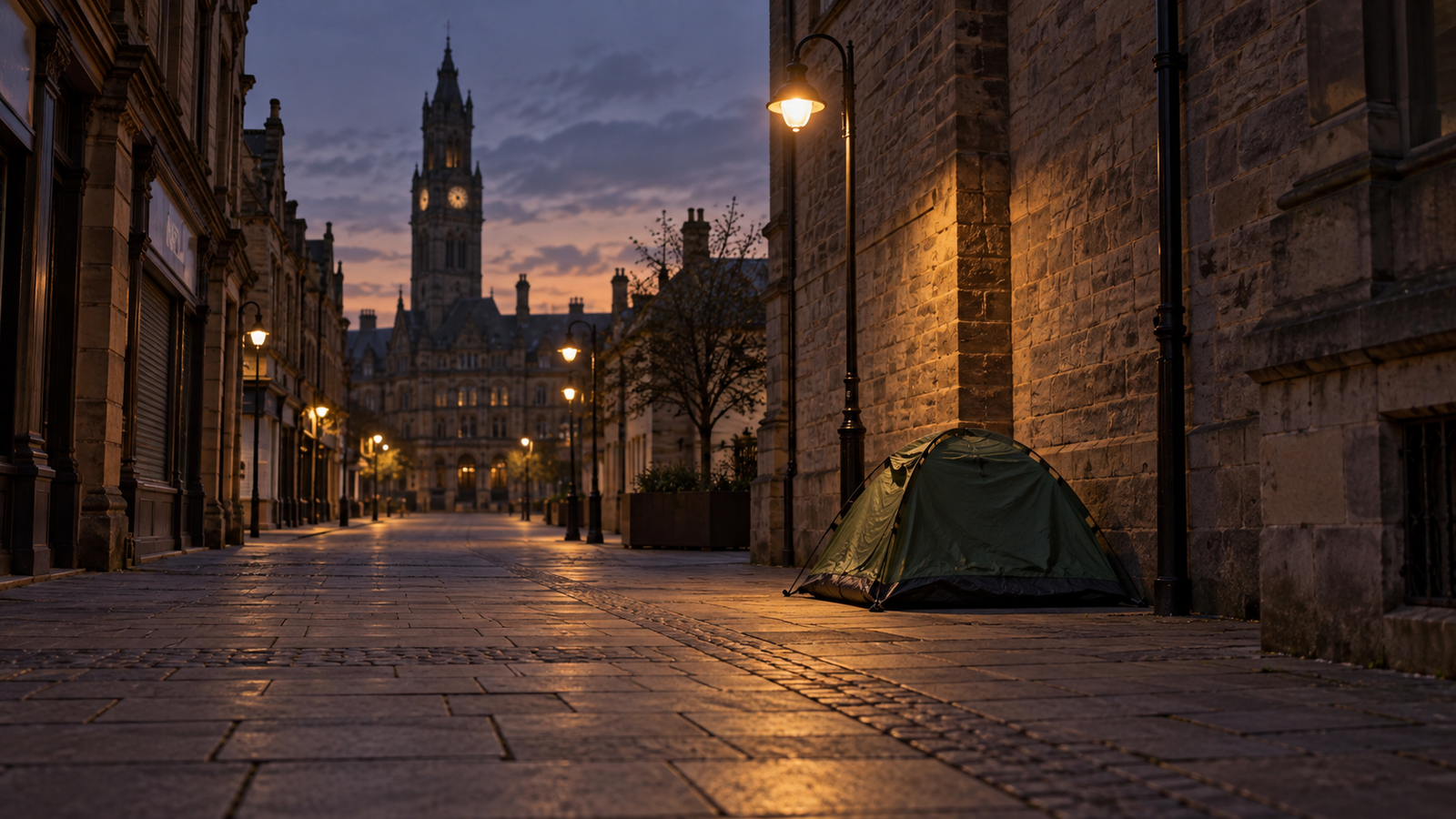
A woman in a tent on a city-centre street deserves the same protection as anyone behind a locked front door. A disturbing Bradford case brings that basic obligation into sharp focus.
According to court reporting carried by London24News on 13 October, Hassan Shah entered a tent on Kirkgate on 8 November last year. Inside was a 26-year-old homeless woman described as dying or already dead. CCTV shown in court reportedly recorded him removing her clothing without checking her condition.
The prosecutor told Bradford Crown Court that her death was unrelated to Shah’s actions and attributed it to synthetic cannabis and alcohol.
What the jury found
The report says Shah had been found unfit to plead because of learning difficulties. In proceedings to determine whether he committed the alleged acts, jurors unanimously found that he did the acts relating to attempted rape and attempted assault by penetration.
That finding should be described accurately, rather than presented as an ordinary criminal conviction. Reports were to be prepared before a further hearing in December. The eventual court order has not yet been established in our reporting.
Protection must reach women on the street
Our editorial view is straightforward: homelessness must never make a woman’s safety or dignity an afterthought. Public protection has to reach those who cannot simply retreat indoors, and the response to sexual violence must be serious, practical and transparent.
The question for authorities is how vulnerable people can obtain shelter, emergency help and protection from exploitation. That requires coordination between street outreach, accommodation services and policing. It also requires a court response that addresses risk within the procedure available to it.
A person’s disability calls for an appropriate legal process. The public also deserves a clear explanation of the safeguards that follow. Compassion and protection are obligations that have to work together.
Nothing in the court report we examined establishes Shah’s nationality or immigration status. Those details cannot be inferred from his name. The case is serious enough on its documented facts: a vulnerable woman, a jury’s finding of attempted sexual violence, and a community that deserves to know how people in her position will be protected.
Independent reporting. A European perspective.