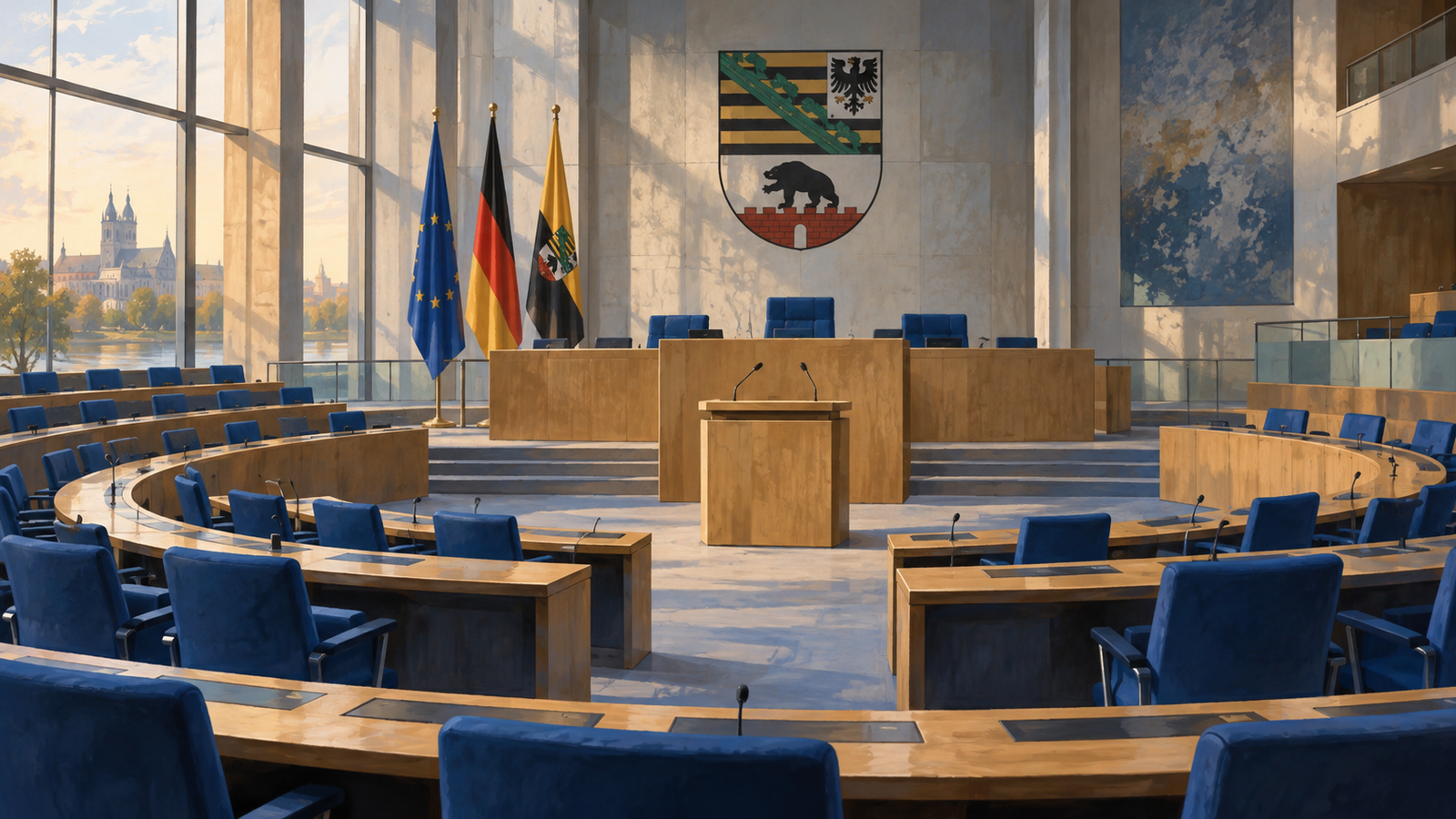
Tobias Rausch has been elected president of Saxony-Anhalt’s regional parliament, marking a significant institutional advance for Alternative for Germany. The Landtag’s official account dates its inaugural sitting to 6 October 2026; reporting records 48 votes for Rausch.
Remix News reported the following day that Rausch said CDU lawmakers had helped elect him. It also reported his claim that four CDU deputies would support AfD candidate Ulrich Siegmund for state premier in December. That future commitment is Rausch’s account, rather than an already completed election of a state government.
The distinction matters. Presiding over a parliament and leading its executive are different offices. A secret ballot also does not by itself establish the identity or motives of every member who voted for a candidate.
Editorial view: voters deserve a substantive argument
The dispute reaches beyond one office. Parties that reject cooperation with the AfD must explain how they intend to govern when its electoral strength makes existing arrangements harder to sustain. Parties seeking cooperation must explain what they would agree to and which limits they would maintain.
We favour political debate that addresses borders, public safety, wages and national accountability directly. Those questions should not disappear behind a contest over which party is allowed to speak. Voters need proposals they can examine, including the practical consequences of adopting them.
Holding office creates obligations as well as opportunities. A parliamentary president should be assessed by the handling of proceedings and the treatment of other elected members. An institution belongs to the whole electorate, including citizens who opposed the winner.
The next decision should be reported when it happens. An assertion about December votes may prove important, but it should not be written as an accomplished transfer of power. Politicians can make confident predictions; reporting must keep the calendar straight.
For now, the confirmed development is Rausch’s election to the presidency. The larger question is whether the political claims surrounding that result become a durable governing arrangement, and what any such arrangement would actually deliver for the people of Saxony-Anhalt.
Independent reporting. A European perspective.