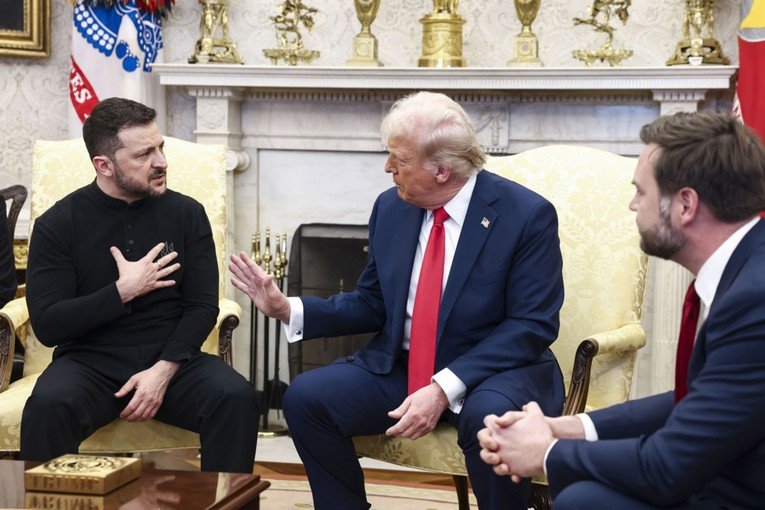
Donald Trump has called for Ukraine to replace its president, bringing a dispute over energy supplies directly into the question of Volodymyr Zelenskyy’s political future.
Speaking to reporters on Saturday, 10 October, the U.S. president said: “I think it’s time for Ukraine to get a new president.” The Associated Press reported the remarks as relations between Washington and Kyiv deteriorated over a new diesel arrangement with Moscow.
Trump argued that Zelenskyy had missed opportunities for a deal to end the war. That was his assessment of the Ukrainian leader, rather than evidence that an agreed settlement was available and had been rejected.
Diesel becomes a diplomatic fault line
According to Index’s account of the developments, Trump criticized Ukrainian attacks on Russian refineries, arguing that they worsen diesel shortages and hurt American farmers and ranchers. His comments followed Friday’s announcement of an agreement with Vladimir Putin for Russian diesel supplies.
Trump announced an initial delivery of more than 300,000 tonnes, followed by additional shipments. Those were announced quantities, not confirmation that the fuel had already arrived.
Zelenskyy opposed the arrangement, saying energy revenue would help Russia continue its war. Index also reported that Germany and Sweden remained committed to sanctions. The disagreement therefore goes beyond the relationship between two presidents: it concerns how fuel supply, economic pressure and efforts to end the fighting fit together.
A call for change is not a transfer of power
Trump’s statement puts additional pressure on Zelenskyy, but it does not itself change Ukraine’s leadership. A foreign president’s preference and a country’s political decision are different things. The report describes a public call, not a completed succession or an announced election timetable.
For readers trying to follow the diplomatic argument, that distinction matters. A dramatic sentence can dominate the day’s coverage while leaving the practical questions unanswered: what settlement is being proposed, what obligations would each side accept, and how would compliance be enforced?
What the public needs from diplomacy
Our editorial view is that peace efforts should be judged by whether they offer a credible path to protecting ordinary people. Families living with the threat of attack, workers paying higher bills and farmers facing expensive fuel all have concrete interests at stake. Their needs deserve more than competing declarations that the other leader is responsible for everything.
An energy agreement should be assessed through its actual terms and consequences. Will it improve supply? Who benefits financially? What leverage does it surrender, and what does it obtain in return? Announcing a deal cannot answer those questions on its own.
The same scrutiny belongs on a proposed peace settlement. A promise to end a war needs a workable mechanism, not simply a change of personality at the negotiating table. Leaders should explain what they are asking people to accept and why they believe it can last.
Trump’s intervention is significant because it makes his dissatisfaction with Zelenskyy explicit. What remains uncertain is whether that pressure will produce a negotiating breakthrough or deepen the rupture between partners. The next meaningful development will be a concrete diplomatic step, rather than another exchange of accusations.
Independent reporting. A European perspective.