
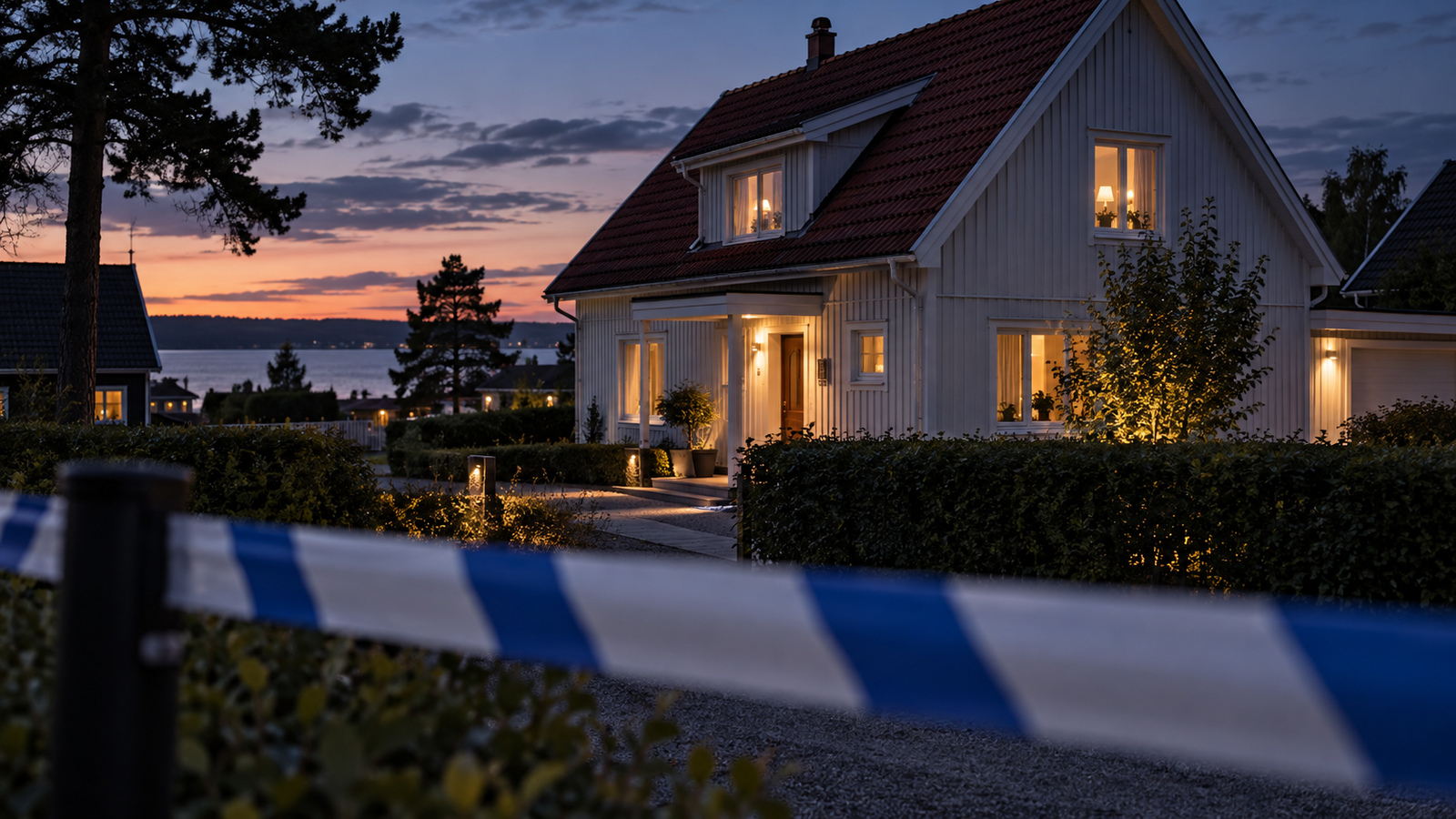
A family home should be the place where public disorder stops at the door. In Västerhaninge, a grenade thrown through a villa window made that assumption impossible.
Local outlet Mitt i reported in August 2026 that Södertörn District Court had convicted a 17-year-old of attempted murder, aggravated destruction endangering the public and attempted arson. The sentence was two years and four months in secure youth care.
The grenade attack occurred in March. Two residents escaped injury, but both dogs were hurt and one died. The residents said they had been unaware of a threat against them. The teenager was also convicted over an attempted shop fire in Järfälla. He denied the acts; the court relied on evidence including phone movements, surveillance recordings and taxi journeys, according to the report.
Remix News also covered the case on 6 August. Neither the name used in that coverage nor a migration-category label establishes the offender’s immigration status. We therefore do not describe this as a proven offence by a foreign newcomer.
Secure youth care is a punishment, but scrutiny is legitimate
Describing the sentence simply as no punishment would be inaccurate. Secure youth care restricts liberty. Nevertheless, the public can reasonably ask whether the duration and the arrangements after release provide adequate protection following a potentially lethal attack.
Youth sentencing involves a different framework from adult imprisonment. That does not make the experience of the residents less serious, or remove the need to explain how rehabilitation and public safety are supposed to fit together.
Our view is that violent offences involving explosives require transparent accountability and close attention to continuing risk. The public should not be offered a choice between concern for a young offender and concern for the family attacked.
Supervision before the attack matters too
Mitt i reported that the teenager was already in compulsory care and living in a foster home at the time. That makes supervision a relevant question, although the report alone cannot establish negligence by any particular carer or authority.
Who assessed the risk? What information was available? Were warning signs shared between agencies? Those questions should be answered through records and review rather than speculation.
A sentencing announcement explains the court’s response after the event. It cannot by itself explain why the event was not prevented.
Families deserve a credible protection plan
The state’s responsibility includes the period after secure care ends. Effective supervision, restrictions where lawful and coordinated assessment need to be concrete enough for the public to understand.
We have not reviewed the complete judgment or established the status of any appeal. The available reporting supports a forceful demand for accountability over this particular attack. It does not support claims that every immigrant community is responsible for it.
Independent reporting. A European perspective.